How a Magnetic Contactor Works
A magnetic contactor is an electrical device used to turn ON and OFF motors or other electrical loads. In LS Electric systems, contactors are commonly used in motor control panels, MCCs, and switchgear.
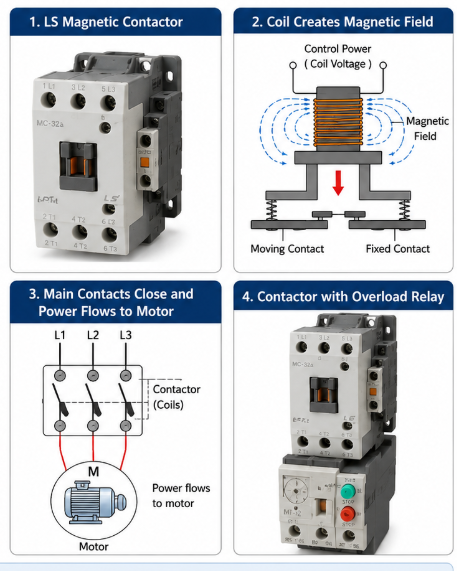
When control power is supplied to the coil, the coil creates a magnetic field. This magnetic field pulls the moving contact inside the contactor. Then the main contacts close, and power flows to the motor or load.
When the coil power is removed, the magnetic field disappears. The spring pushes the contacts back open, and the motor or load turns OFF.
Simple operation:
Control power ON → Coil energized → Magnetic field created → Contacts close → Motor turns ON
Control power OFF → Coil de-energized → Contacts open → Motor turns OFF
Why Thermal Overload Relay ?
A contactor is mainly used for switching. It does not protect the circuit from short circuits by itself, so a circuit breaker or fuse is also required.
For motor protection, a thermal overload relay is usually connected with the contactor. The contactor only turns the motor ON and OFF. If the motor takes too much current for a long time because of overload, jammed load, or mechanical problem, the motor can overheat and get damaged. The thermal overload relay senses this overload current and trips the control circuit, which opens the contactor and turns the motor OFF. This helps protect the motor from overheating and damage.